All PostsAugust 15, 2025
How to Start a Referral Program That Actually Works

Written by Ayo Abdul

Starting a referral program boils down to four actionable steps: define clear goals, choose compelling incentives, make sharing effortless, and promote it to your best customers. Nailing these four elements will turn your existing customer base into a powerful and predictable engine for growth.

Before diving into the "how," let's establish the "why." A referral program isn't just another marketing task; it's a strategic asset that leverages the trust you've already earned.
When a happy customer recommends your product, they are transferring their credibility and positive experience to a new person. This built-in trust gives you a massive advantage. Paid ads have to fight for attention and build credibility from scratch. A referral arrives pre-vetted by a trusted source. This is why referred customers are fundamentally better. They are more loyal, less sensitive to price, and a better fit for your ideal customer profile from day one.
The economic benefits of leveraging this trust are direct and compelling. Referred customers don't just convert at higher rates; they also spend more over their lifetime. This fundamentally changes the math on your customer acquisition costs (CAC). Instead of pouring money into ads with diminishing returns, you're investing in a self-perpetuating cycle where every happy customer can bring in the next one.
The data confirms this. Launching a referral program taps into proven customer behavior with a significant economic upside. For instance, clients acquired through referrals have an astonishingly higher lifetime value—averaging around $187,450—compared to $67,390 for those acquired through other channels. That's a 178% increase in customer value, which is exactly why ROI-focused businesses prioritize referral strategies.
Beyond immediate financial wins, a solid referral program cultivates a deeper sense of community. It shifts customer relationships from transactional to collaborative. When customers feel valued and are rewarded for spreading the word, they become more invested in your success.
This creates a powerful growth flywheel:
A referral program isn't an expense; it's an investment in your most effective marketing asset: your existing customers. By empowering them to share, you create a scalable and cost-effective acquisition channel built on genuine enthusiasm.
To maximize your program's impact, it's essential to understand foundational concepts like referral marketing. Grasping these fundamentals provides the context needed to build a program that not only drives sign-ups but also strengthens your brand for the long term, making your growth more predictable and efficient.
A successful referral program is built on a solid foundation, not just a generic "share with a friend" button. Before you consider rewards or referral links, map out your strategy. This step connects your program directly to your business goals, ensuring every decision is deliberate and purposeful.
First, define what success looks like for you. "Getting more customers" is too broad. Set specific, measurable goals that align with your company's objectives.
For a SaaS startup in growth mode, a specific goal might be to increase new sign-ups by 15% this quarter. For a high-end e-commerce store focused on profitability, the goal could be to raise the average customer lifetime value (LTV) by 20%.
Setting a single, clear objective will shape every other decision. A goal focused on volume might lead you to a simple, low-value reward that’s easy to claim. But if you’re trying to attract enterprise clients, you’ll need a more substantial, high-value incentive to capture their attention.
Here are actionable objectives to consider:
Getting this right is crucial. Research from McKinsey shows that word-of-mouth marketing—the engine of any referral program—drives more than twice the sales of paid advertising. Furthermore, Nielsen data reveals that 92% of consumers trust recommendations from people they know above all other forms of advertising.
Once your objective is clear, identify who will help you achieve it. You are looking for your true fans—the ones who already love your product and are likely already telling their friends about it.
To find them, dive into your data. Look for users with high engagement rates, repeat purchase histories, or top-tier Net Promoter Scores (NPS). These are your prime candidates.
It is just as important to understand what motivates them. While cash is an obvious incentive, it's not always the most effective. In fact, one study showed that non-cash incentives can be 24% more effective than cash rewards. People are often driven by status, early access to new features, or the satisfaction of helping a friend discover something valuable. As you build out your strategy, it's worth exploring different affiliate program models to see what structure best aligns with your audience's motivations.
A branded portal, like this one from Push Lap Growth, makes advocates feel like part of an exclusive club. It reinforces your brand identity and creates a professional, trustworthy experience for both the referrer and the invited friend.
Finally, decide which metrics to track from day one. Without measurement, you're just guessing. These Key Performance Indicators (KPIs) are your dashboard—they tell you if you're hitting your goals and show you where to make adjustments.
At a minimum, you must track:
By monitoring these numbers from launch, you can make smart, data-driven decisions. A low share rate might indicate an uncompelling incentive. A poor conversion rate could mean your landing page is confusing. This foundation—clear goals, deep advocate understanding, and solid metrics—is what separates a thriving referral program from one that fails.
Your planning won't matter if the core offer of your referral program is unappealing. If the incentive doesn't excite your customers, the entire system will fail before it starts. The key to a great offer is not spending the most money; it's understanding what your customers genuinely value. Think of it as a thank-you gift for their loyalty.
Your first major decision is who receives a reward. With a single-sided incentive, only your current customer—the advocate—gets rewarded for a referral. This can work, but it relies entirely on their goodwill.
For a more powerful approach, use a double-sided incentive, where you reward both the referrer and their friend. This strategy changes the dynamic of sharing from a self-serving act to a gift. A "Give $20, Get $20" offer makes your advocate a hero. They are not just earning for themselves; they are also giving their friend a great deal. This removes social awkwardness and makes the exchange a win-win.
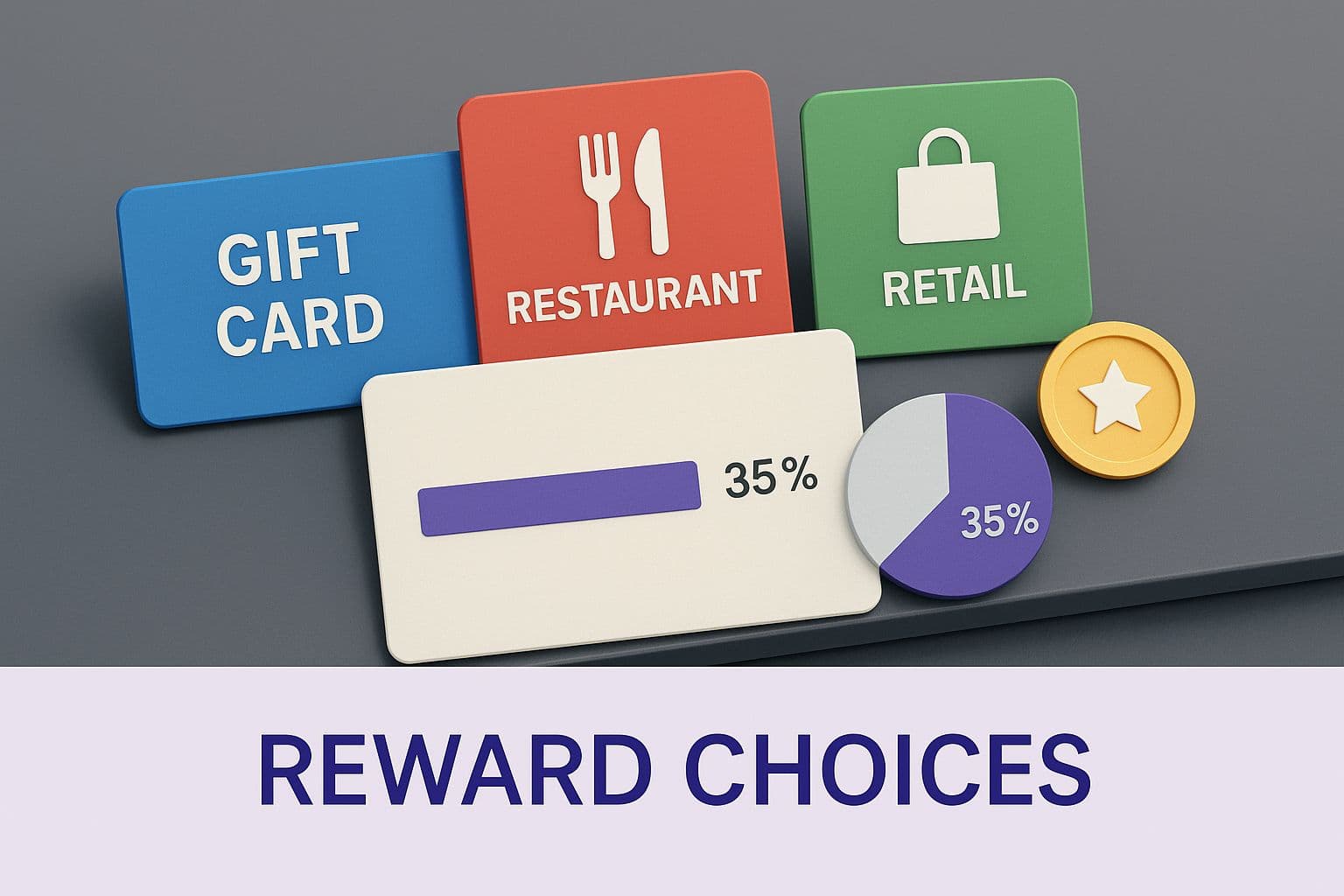
As you can see, modern programs offer a variety of rewards beyond cash—from gift cards to exclusive perks—to make your offer compelling.
Next, determine the type of reward. While cash seems obvious, it isn't always the most effective. Studies show that non-cash incentives can be 24% more effective at boosting performance than cash payouts.
Choosing the right reward type is crucial. The table below outlines popular models to help you decide what fits your business and customers best.
| Incentive Model | How It Works | Best For | Potential Pitfall |
|---|---|---|---|
| Cash or Gift Cards | Advocates receive a direct cash payment (e.g., via PayPal) or a flexible gift card (e.g., Amazon) for successful referrals. | Businesses with infrequent purchases (e.g., mattresses, software) where store credit has less appeal. | Can feel purely transactional and may attract lower-quality, "mercenary" referrals. |
| Store Credit/Discounts | Advocates and/or new customers receive a credit or percentage discount on their next purchase. | E-commerce stores and subscription services where repeat business is a key goal. | Less motivating if the customer doesn't plan on making another purchase soon. |
| Product-Based Rewards | Rewards are given in the form of a free product, an upgrade, or access to exclusive features. | SaaS companies or brands with a highly desirable product. A classic example is Dropbox's offer of extra storage. | The perceived value must be high enough to motivate action. |
| Tiered or Milestone | The value of the reward increases as an advocate refers more people. The first referral might get $10, but the fifth gets $50. | Businesses looking to identify and activate "super-advocates" for long-term growth. | Can be complex to manage and communicate clearly to your user base. |
The best reward is one that not only excites your customers but also reinforces your brand's value. Dropbox gave away more of their core product, growing 3900% in the process. That's perfect alignment.
The takeaway: Your incentive should feel like a natural extension of your brand experience. It must provide real value, align with your brand's identity, and be financially sustainable for your business.
Even the best offer will fail if sharing is a chore. You must make participation so easy it can be done in seconds.
Start by giving every advocate a unique, one-click-to-copy referral link. Then, provide pre-written messages they can use immediately.
Removing friction dramatically increases the chances of someone sharing.
Finally, direct the referral link to a dedicated landing page built for the referred friend. The page must immediately confirm the offer ("Sarah sent you 20% off!") and clearly state your value proposition. A smooth, personalized handoff from the referral link to the landing page is what converts a warm lead into your next customer.
You’ve built a great offer and simplified sharing. Now it's time to build momentum. Even the most generous referral program will fail if no one knows about it. A smart promotion strategy is what turns a good idea into a growth engine.
The goal is not to blast every customer with a generic announcement. The key is to execute a strategic rollout that builds buzz, gathers feedback, and makes your official launch a success.
Before a full-scale launch, conduct a "soft launch" with a small, hand-picked group of your most loyal customers. This is your friendly beta test. Target your champions—those with high NPS scores, repeat buyers, and vocal supporters.
This early phase is valuable for two reasons:
A soft launch is your secret weapon for a flawless public debut. It transforms your most dedicated customers into an insider group, making them feel valued while you gather mission-critical feedback to perfect the experience for everyone else.
After gathering feedback from your soft launch and making improvements, it's time to go live. The key is to meet your customers where they already are. Don't rely on a single channel; build a coordinated campaign that integrates your program into the entire customer experience.
Start by creating a simple promotion kit. This should include branded assets like web banners, social media images, and pre-written copy to ensure a consistent message across all platforms.
Here’s how to create a promotional blitz that gets real traction:
Timing is perhaps the most critical element. When you ask for a referral can make or break your participation rates. Aim for a "moment of delight"—the point when customers are happiest with your brand.
Data shows that referral leads convert 30% higher than leads from any other channel, and a perfectly timed ask taps directly into that trust and excitement.
Map out these key moments in your customer journey:
By timing your asks strategically, you change the dynamic. It becomes a relevant, contextual invitation rather than a random marketing blast, feeling like the natural next step for a happy customer.

Launching your referral program is just the beginning. The real success comes from continuous, data-backed optimization that transforms a decent program into a predictable growth engine.
It's time to use the key metrics you defined during planning. Think of your program as a funnel. By analyzing data at each stage, you can identify points of friction and make targeted changes that improve results.
Every referral program has critical steps, and a leak anywhere in the funnel can undermine your results. Break down the journey and analyze the numbers for each part.
Use industry benchmarks as a starting point. For SaaS and tech companies, the average referral rate is around 4.75%. Program participation usually falls between 5% and 15%. A solid share rate is often between 25% and 35%, with the conversion from referral to paying customer landing in the 8% to 12% range. You can get a deeper look into these key referral program metrics and benchmarks on Prefinery.
Once you identify a weak spot in your funnel, start experimenting methodically. Change one variable at a time, measure the impact, and let the data determine the winner.
For example, if your share rate is low, the incentive is the likely culprit. A/B test your current offer against a different one to see what truly motivates your customers.
Offer A (Control) vs. Offer B (Variant)Run the test for a few weeks and analyze the results. Did the variant generate a higher share rate? This systematic approach eliminates guesswork.
Don't make changes based on gut feelings. Use A/B testing to systematically improve every element of your program, from the email subject line inviting people to join, to the call-to-action button on your landing page.
Here are other high-impact elements to test continuously:
A referral program should not be a "set it and forget it" project. As your business and customers evolve, your program must adapt.
Periodically survey your top advocates for feedback. Ask them what they love, what they would change, and what would motivate them to share more. You might discover that a tiered reward system would be a game-changer for your biggest fans.
This constant cycle of measuring, testing, and evolving is the key to long-term referral success. It ensures your program remains fresh, engaging, and continues to drive a healthy return. These principles are also vital for more complex partner ecosystems. You can find more advanced strategies for mastering affiliate marketing program management in our detailed guide.
Even with a solid plan, questions will arise. Here are practical answers to some of the most common queries about starting a referral program.
The right reward value is a strategic decision, not a guess. Aim for a number that is significantly less than your Customer Acquisition Cost (CAC) but substantial enough to motivate action.
For a B2C company, this could be a $20 account credit or access to a premium feature. For a B2B service with high-value contracts, rewards could be in the hundreds of dollars. Don't overlook non-cash perks like exclusive content or a free product upgrade, which can feel more special and be more cost-effective.
A common mistake is offering too little. You are asking customers to vouch for you and put their reputation on the line. The reward must feel like a genuine "thank you," not just a transaction.
Timing is crucial. Ask during a "moment of delight," when your customer is happiest with your product or service. Asking before they have experienced value will likely be ignored.
Look for these golden opportunities:
These terms are often confused but represent different strategies. Understanding the distinction helps you build the right program for your business.
A referral program is for your existing customers who already love your brand. Their motivation is a positive experience, and rewards are typically discounts or store credit. It's an organic, community-powered growth loop.
An affiliate program is a formal business partnership with professional marketers, bloggers, or influencers who promote your product to their audience for a cash commission. If this performance-based model is a better fit, explore our guide on how to start an affiliate marketing business.
Protecting your program from fraud is essential for a positive ROI. A few smart rules can keep the system honest.
Implement simple checks, such as requiring a unique IP address for the referrer and their friend. Clearly state in your terms and conditions that self-referrals are prohibited.
Most importantly, only pay out rewards after the new customer has completed a meaningful action, like making their first purchase or staying active for 30 days. Many referral platforms have built-in fraud detection tools that can automate this process.
Ready to turn your happy customers into your most powerful growth engine? With Push Lap Growth, you can launch a fully branded referral and affiliate program with real-time tracking, automated payouts, and seamless integrations. Start your 14-day free trial today and see how easy it is to build a program that delivers real results.